
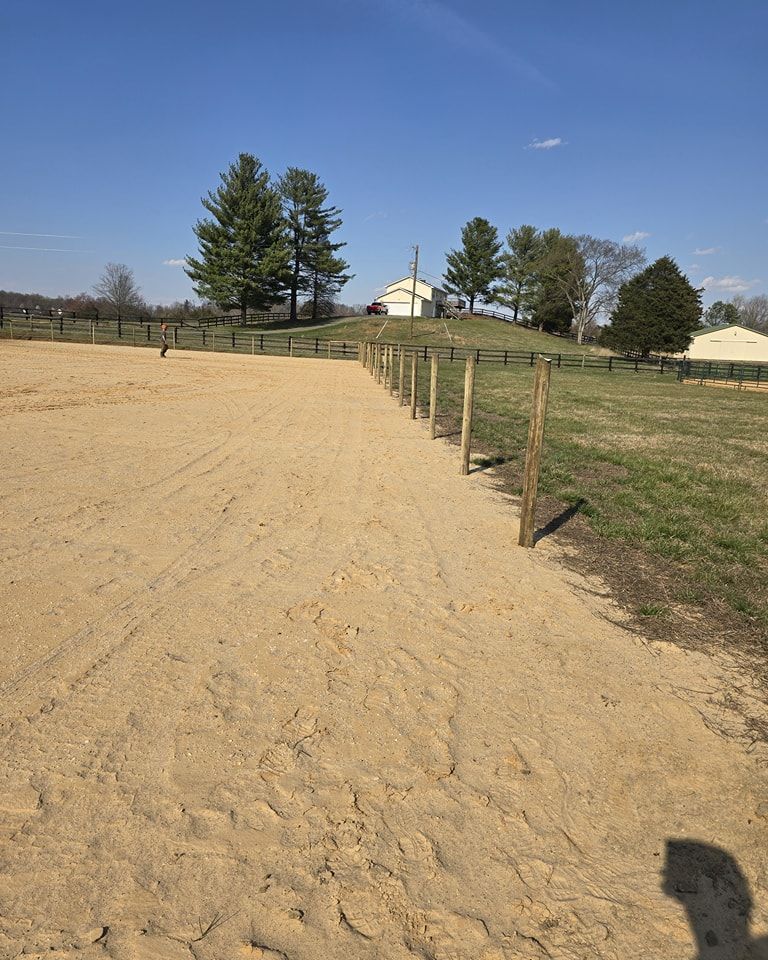
Arena Surfaces Built for Daily Riding
Riding Rings in Brandy Station for equestrian properties needing safe, maintained footing
Arena footing that drains poorly, develops hard spots, or shifts unevenly creates inconsistent surfaces that affect how horses move and increases the risk of injury during training or turnout. Fatboyz Outdoor Services builds riding rings in Brandy Station that address drainage, base stability, and footing material selection based on how the ring gets used. The difference between a functional arena and one that becomes unusable after rain comes down to base preparation and material layering before the first ride happens.
Constructing a riding ring involves site grading to establish drainage flow, compacting a base layer that prevents settling, and installing footing material that provides traction without excessive dust. Properties in Brandy Station deal with clay soils that hold water, so proper drainage design directs runoff away from the ring rather than letting it pool in low spots.
Arrange a site consultation to assess grading requirements and footing options for your training needs.
Why Base Preparation Determines Ring Performance
Base construction starts with excavating to the required depth, installing drainage where groundwater or runoff affects the site, and compacting aggregate in layers that resist shifting under repeated hoof impact. Skipping base compaction leads to footing that migrates toward the rail or develops ruts in high-traffic areas where horses naturally travel.
Once the ring is finished, you'll work on a surface that drains within hours instead of days, maintains consistent depth across the arena, and requires less frequent dragging to keep footing level. The base stays stable through freeze-thaw cycles common in Virginia winters, which prevents the heaving and cracking that disrupts footing integrity.
Footing material options include sand, sand-fiber blends, or rubber-enhanced surfaces, each offering different traction and cushioning characteristics. Your choice depends on discipline, how many horses use the ring daily, and whether dust control matters for nearby structures or respiratory concerns.
Answers to Frequent Service Questions
Building a riding ring involves decisions about location, drainage, footing materials, and maintenance access that affect how the arena performs over time.
What size riding ring works for different disciplines?
Dressage rings typically measure 20 by 60 meters or 20 by 40 meters, while jumping arenas often require 100 by 200 feet or larger, depending on course design and the number of horses training simultaneously.
How does drainage affect arena construction?
Grading directs surface water away from the ring, while subsurface drainage manages groundwater that rises through the base, which matters more on low-lying sites or properties with high water tables common near Brandy Station creek systems.
When should footing be added after base construction?
Allowing the compacted base to settle for several weeks before adding footing prevents uneven surfaces that develop when base materials shift after initial use.
What maintenance does a riding ring require?
Dragging after use redistributes footing, watering controls dust during dry periods, and periodic replenishment replaces material that breaks down or gets displaced toward arena edges.
How is ring orientation chosen?
Positioning the long axis north-south reduces direct sun glare during morning and evening rides, and considering prevailing wind direction affects dust management when using sand-based footing.
Equestrian properties around Brandy Station benefit from rings built with drainage and base systems that handle local soil conditions and seasonal weather patterns. Fatboyz Outdoor Services constructs riding rings that support consistent training schedules regardless of recent precipitation, so schedule a property visit to review site conditions and discuss footing preferences for your riding program.